



Credit: Junaedi Uko
On National Teachers’ Day, the story of Hanifah, a teacher at SDN 015 Tanjung Selor in Bulungan, North Kalimantan, shows how efforts to strengthen learning can begin with a teacher’s willingness to understand each student’s needs. Through differentiated learning and the use of simple teaching aids, Hanifah works to ensure that every student has the opportunity to learn and develop according to their abilities.
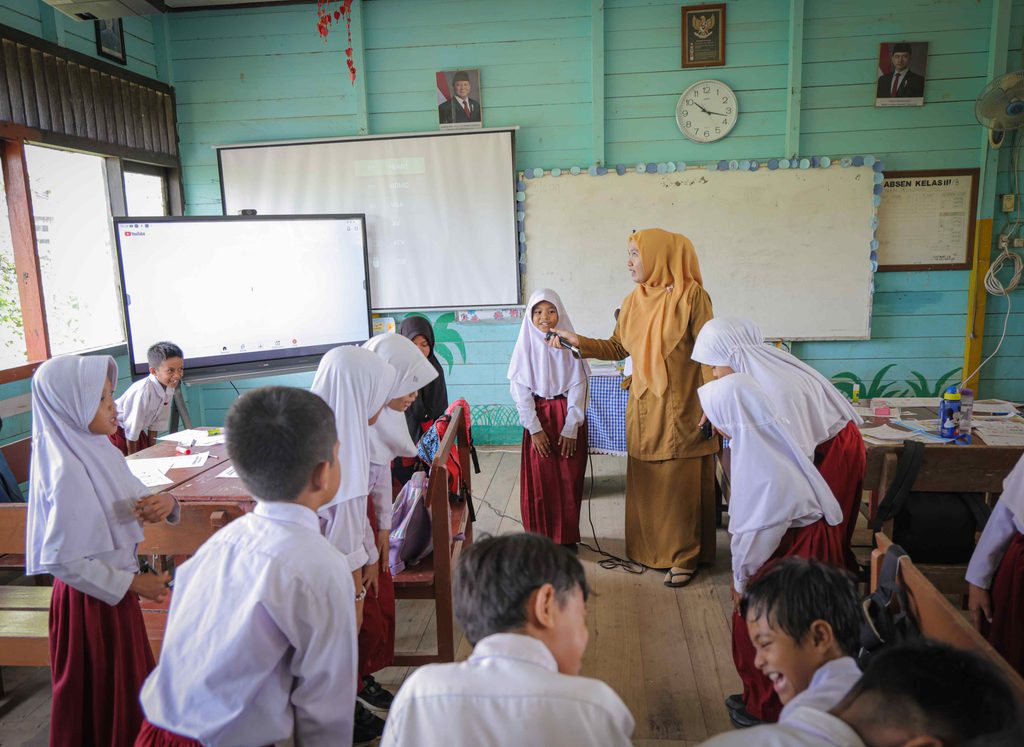
There are 25 students in Hanifah’s Grade 3B classroom at SDN 015 Tanjung Selor. They learn together in the same classroom, but they do not always learn in the same way. Some are already fluent readers, while others are still sounding out words. Some can quickly follow instructions, while others need repeated explanations and closer support. Hanifah, their teacher, sees this diversity every day. Through the Student Learning Profile (PBS), she found that seven of her students had functional learning barriers, ranging from difficulties with reading and writing to hearing and visual impairments, as well as social and emotional barriers.
The results of a reading assessment conducted in July 2025 reflected these challenges. At the time, only 56 per cent of students in Hanifah’s class could read sentences, while just 8 per cent could read with comprehension.
For Hanifah, these figures became important clues to understanding her students’ needs. She realised that if every child starts from a different point, then teaching cannot always follow a one-size-fits-all approach. “Every child is different, and those differences need to be addressed through learning that provides space for each child to grow,” she thought. Those differences, therefore, must be responded to through learning approaches that enable every child to develop and thrive.
Adapting Learning to Every Child’s Needs
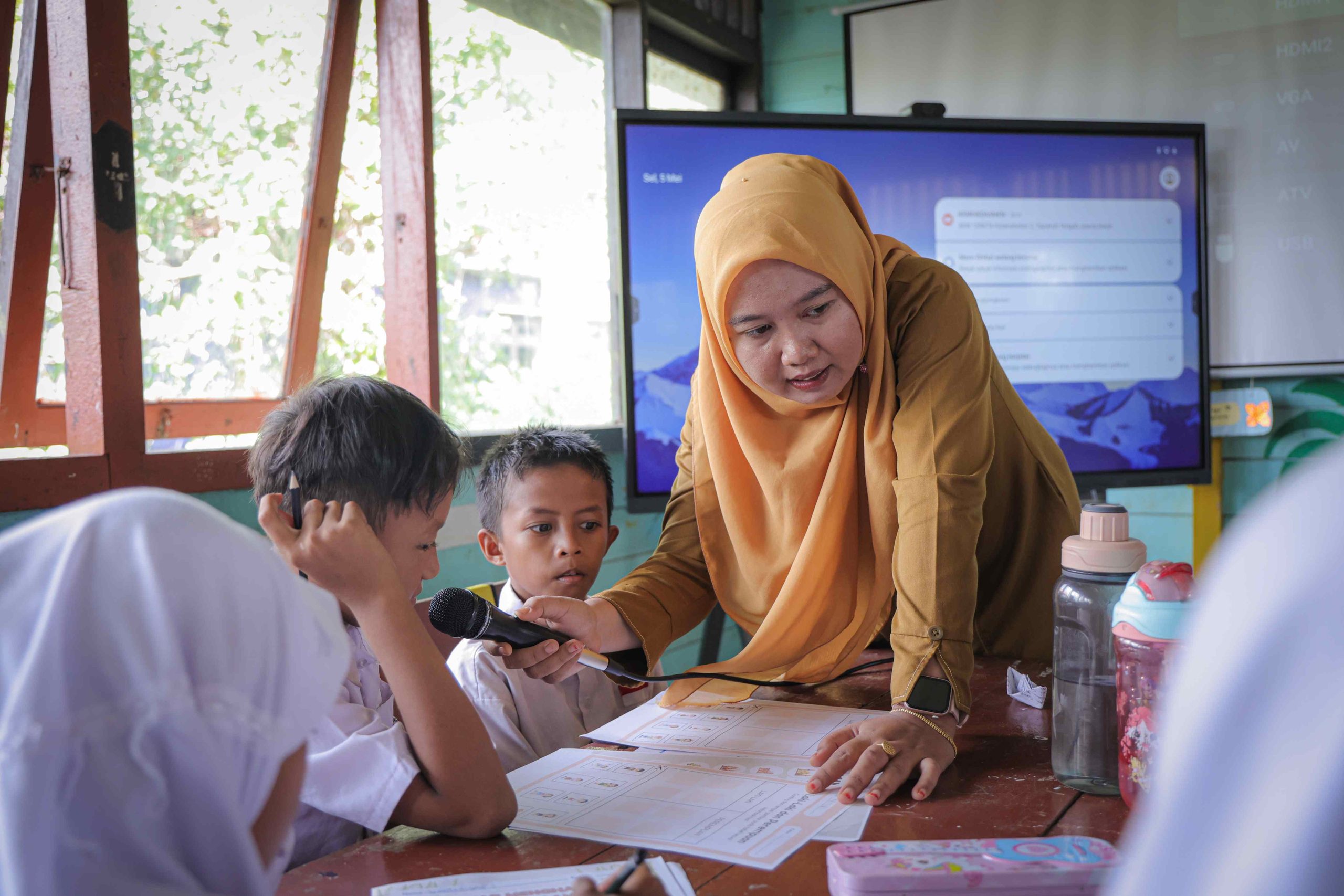
Hanifah began implementing differentiated learning in her classroom. She grouped students according to their reading abilities and learning needs, then adapted the materials and support she provided. Students who were not yet fluent readers received more support with phonics and key-word recognition, while those who were more advanced were given more complex reading materials and comprehension questions that encouraged deeper thinking. Through this approach, Hanifah no longer viewed her class as one group that needed to learn in the same way.
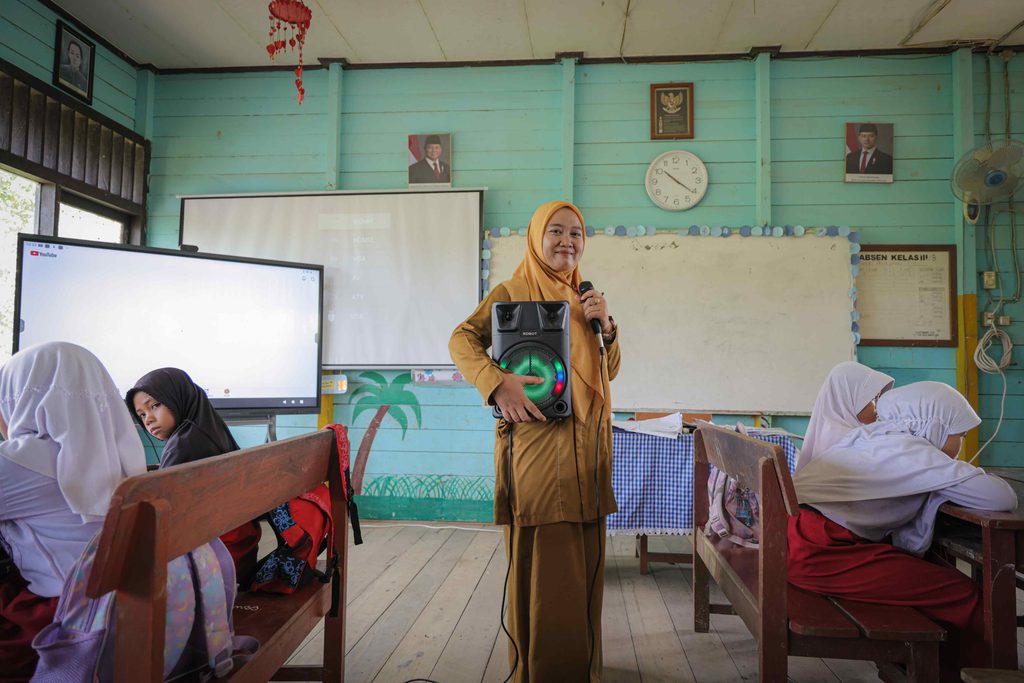
However, managing several learning groups at once brought its own challenge. While Hanifah was providing intensive support to one group, she still needed to make sure the other students could hear her instructions and understand what they needed to do. To help address this, Hanifah began using a simple tool that has accompanied her in the classroom for almost a year: a small loudspeaker, locally known as a pelantang.
For Hanifah, the pelantang is more than a tool to make her voice louder. It helps her maintain communication across the classroom when her attention needs to be divided. While she is supporting one group, students in the other groups can still hear her instructions and continue working independently.
“Rather than weakening the message being delivered, the softer voice actually reached each child’s ears more clearly,” she said.
Credit: Junaedi Uko
When Progress Begins to Show
The pelantang, of course, is not the only reason behind the progress made by Hanifah’s students. It works alongside a broader process: using PBS data to understand each child’s needs, conducting assessments to identify their starting points and track progress, and applying differentiated learning strategies that allow Hanifah to adapt teaching to her students’ abilities. Six months after the initial assessment, the results began to show. By January 2026, the percentage of students who could read sentences had increased from 56 per cent to 84 per cent. Reading comprehension also increased from 8 per cent to 40 per cent—a 32 percentage-point improvement in six months.
For Hanifah, these figures are certainly encouraging. But the changes she sees in her classroom go beyond assessment results. More children are able to follow instructions, understand what they read, and participate in learning. Their progress also shows what can happen when children’s needs are recognised and teaching is adapted accordingly.
On National Teachers’ Day, Hanifah’s experience reminds us that being a teacher also means continuing to learn, adapt, and find the right approaches for every student.
Credit: Junaedi Uko