



Knowledge Nugget IFI Book Vol 1 ( Part 3 )
Home \ Publication \ Publication \ Knowledge Nugget IFI Book Vol 1 \ Part 3
Building Local Strength: Enhancing Capability for Change
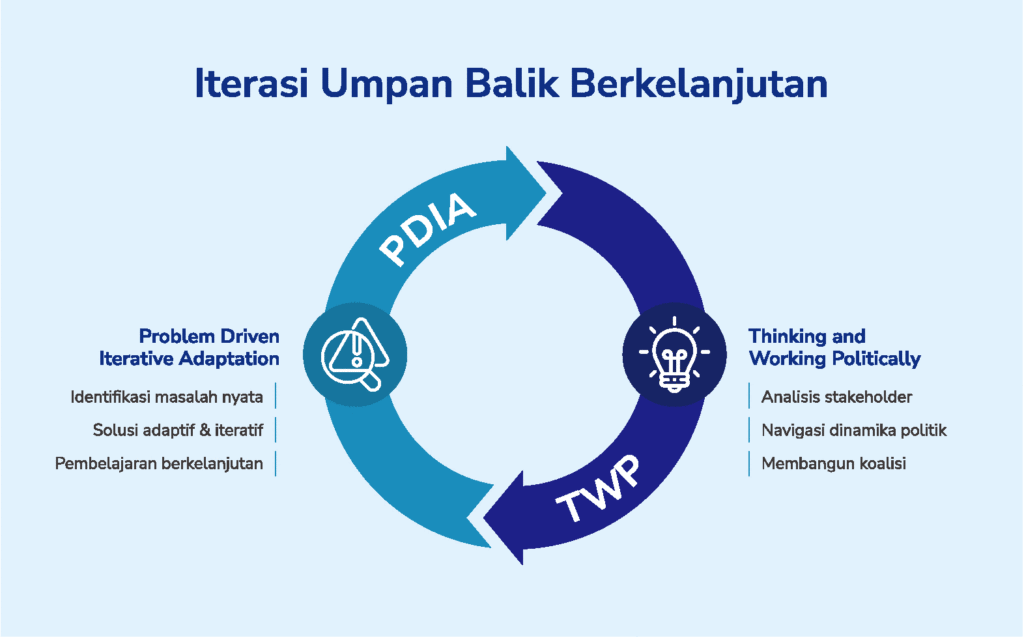
Indonesia’s education reform isn’t just about new policies – it’s about building the capacity of schools, districts, and educators to create lasting change. INOVASI ‘s approach to problem-solving is explored through two key strategies: Problem-Driven Iterative Adaptation (PDIA) [MH1] [MH2] and Thinking and Working Politically (TWP). [MH3] [MH4] These methods focus on empowering local stakeholders to innovate, learn from experience, and drive improvements that fit their unique challenges.
A New Paradigm for Change
Traditional reform methods often fall short when applied to diverse, complex systems like Indonesia’s education system. Instead of imposing one-size‑fits‑all solutions[JI5] , INOVASI embraced a dynamic approach that puts local needs at the centre. This article [MH6] outlines how PDIA and TWP work together to develop the capacity of local education systems – transforming abstract policies into practical actions that make a real difference in the classroom.
Hard Fact: Over its eight-year journey, INOVASI Phase 1 and 2 engaged 17 partner districts, demonstrating that local capacity can be significantly enhanced when stakeholders are empowered to identify and solve problems on their own (Andrews, Pritchett & Woolcott, 2017).
Problem-Driven Iterative Adaptation (PDIA): Learning by Doing
PDIA is all about starting with real challenges and working step-by-step to find solutions that fit the local context. Rather than waiting for a perfect plan[JI7] , PDIA encourages local educators and policymakers to experiment, learn from failures, and iterate their approaches. This method fosters a culture where mistakes are seen as learning opportunities – leading to more effective, sustainable improvements.
These approaches were also employed internally within the program. Continuous analytics, six-monthly team reflections on monitoring data, and iterative strategy testing, supported implementation teams to maintain a relentless focus on program goals and adapt strategies and approaches in response to evidence on successes and failures (Teskey and Tyrell 2021: 11-12).[JI8]
Hard Fact: Research suggests that iterative, locally driven solutions can improve policy outcomes by 15–20% in settings similar to Indonesia (Andrews et al., 2017). [JI9]
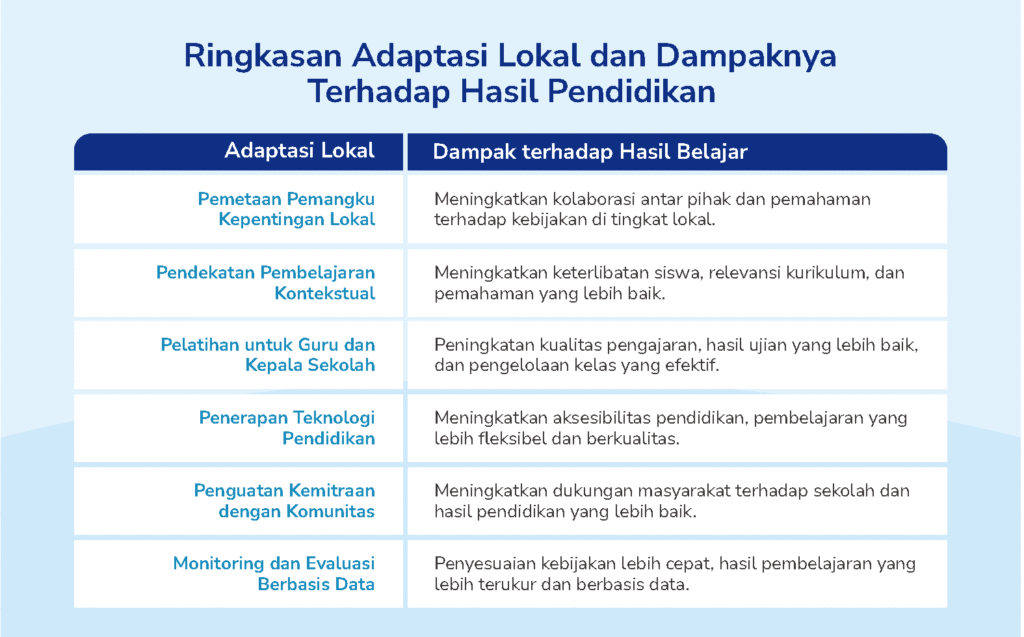
By actively engaging those who understand local challenges best, PDIA transforms reform from a top‑down mandate into a collaborative, adaptive process.
Thinking and Working Politically (TWP): Navigating Local Realities
Complementing PDIA, the TWP approach focuses on the local political and social dynamics that influence how policies are implemented. After all, the test of policy performance is in implementation. TWP is about understanding the “who,” “why,” and “how” behind decision-making. It encourages stakeholders to build alliances and secure the necessary buy-in from community leaders and government officials, ensuring that new ideas are both accepted and sustained in schools and classrooms.
Hard Fact: Evidence from similar initiatives shows that when political analysis and coalition-building are integrated into reform processes, the likelihood of successful implementation increases dramatically (Marquette, 2018).
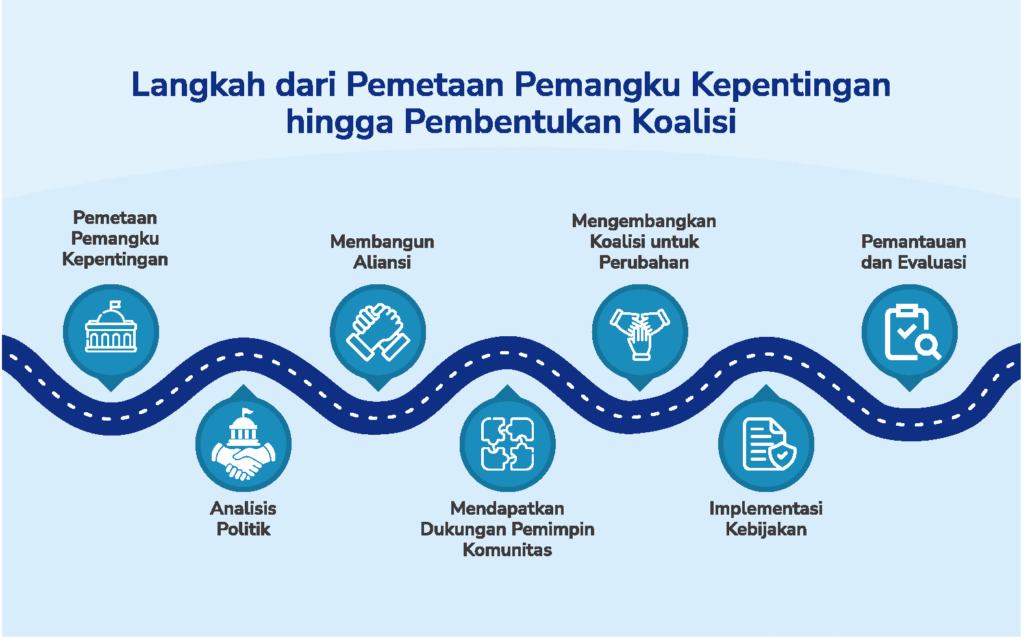
TWP ensures that reforms are not only technically sound but also politically feasible, bridging the gap between local innovations, contexts and capacities [JI10] and national policy agendas. At a practical level this meant acting as a “critical friend”: helping officials take policy in the direction they wanted to go by supporting their understanding of processes that assist effective action in the policy environment; and facilitating their access to other systems’ experience of the consequences of different options available to them.
Dynamic Interaction with Local Contexts
Indonesia’s vast and varied regions mean that what works in one district might not work in another. The beauty of the PDIA and TWP combination is its inherent flexibility. As local conditions evolve – whether due to economic shifts, demographic changes, or even the disruptions of the COVID‑19 pandemic – these approaches adapt, ensuring that solutions remain relevant and effective.
Local pilot projects under INOVASI have provided valuable feedback loops, allowing for quick adjustments and continuous improvement. This adaptive process has enabled districts to fine-tune strategies in real time, resulting in tangible improvements in policy implementation and classroom practices. Lessons from these pilots were fed into national policy making to bridge policy-implementation gaps.
Building Sustainable Systems for the Future
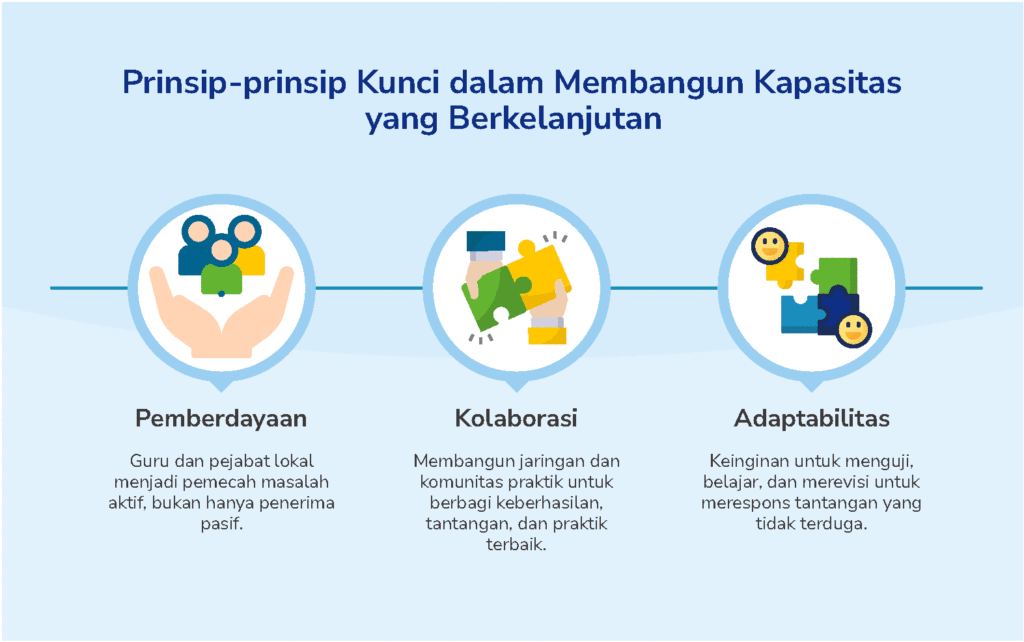
This is a call to invest in local capability. Equipping educators and administrators with the tools and strategies needed to solve problems independently was the groundwork for a resilient, sustainable education system. This isn’t about one-off fixes – it’s about creating a culture of continuous improvement that will endure long after the initial reforms.
Key elements include:
- Empowerment: Teachers and local officials become active problem solvers rather than passive recipients of directives.
- Collaboration: By building strong networks and communities of practice, local stakeholders can share successes, challenges, and best practices.
- Adaptability: A willingness to test, learn, and revise ensures that the system can respond effectively to unforeseen challenges.
Hard Fact: Pilot data from INOVASI indicate that districts employing these adaptive methods have seen measurable improvements in local policy implementation and teaching practices (INOVASI Evaluation Reports, 2022).
Looking Ahead: The Road to Lasting Change
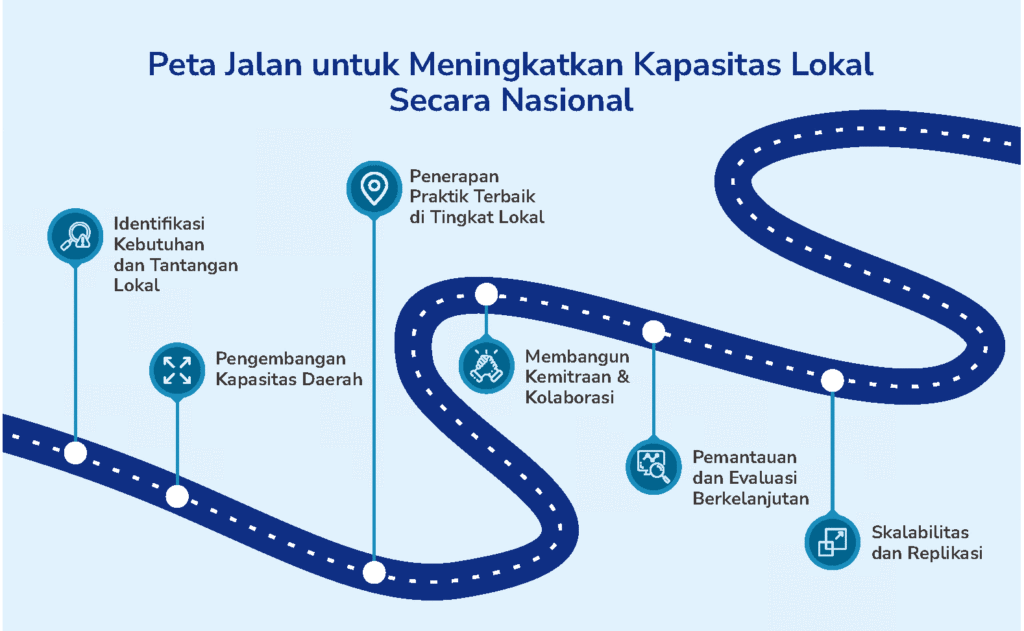
These insights show that true reform is a gradual, evolving journey. By harnessing the power of PDIA and TWP, Indonesia is building a robust foundation for educational improvement. The focus now is on scaling these successful local practices, ensuring that every school and district has the capacity to drive its own change.
As INOVASI moves forward, the challenge will be to maintain this momentum and continue refining the approaches that have proven effective. The lessons learned here serve as a roadmap for other countries facing similar challenges, demonstrating that when local voices lead the way, systemic change is not only possible – it’s sustainable.
[Table Placeholder: Roadmap for scaling local capacity improvements nationwide]
This article [MH13] tells the story of building capability from the ground up. By combining the iterative, hands-on approach of PDIA with the politically savvy methods of TWP, local stakeholders are empowered to turn challenges into opportunities. Effective education reform is not about imposing rigid solutions but about creating a flexible, adaptive system where every stakeholder contributes to lasting change. With data-backed successes and a clear vision for the future, Indonesia is on its way to transforming its education system – starting with ‘what works’ at local level informing national policy in this vast nation.[JI14]